We are supported by our audience. When you purchase through links on our site, we may earn an affiliate commission, at no extra cost for you. Learn more. Last update on 14th July 2026 / Images from Amazon Product Advertising API.
Grimdark miniature painting transforms colorful fantasy figures into weathered, battle-scarred representations using deliberately bleak aesthetics. You’ll achieve this style through desaturated color palettes dominated by grays, browns, and muted earth tones, combined with heavy weathering effects that showcase rust, dirt, and battle damage. The technique emphasizes moral ambiguity and existential hardship through oil washes, strategic chipping, controlled splatter methods, and atmospheric lighting that creates deep shadows and subdued highlights, bringing psychological depth to your miniatures.
Notable Insights
- Grimdark is a miniature painting aesthetic originating from Warhammer 40,000 that emphasizes bleakness, nihilism, and psychological darkness.
- The style uses dominantly dark, desaturated color palettes featuring grays, browns, faded blues, harsh reds, and sickly greens.
- Heavy weathering effects showcase dirt, rust, battle damage, and decay to convey themes of dehumanization and hardship.
- Compositional storytelling employs dynamic poses, bleak landscapes, debris placement, and symbolic elements like skulls and chains.
- Technical execution relies on oil washes, texture pastes, weathering powders, and strategic lighting to achieve authentic grimdark effects.
The Origins and Cultural Impact of Grimdark Aesthetics
While the term “grimdark” has become synonymous with a specific aesthetic in miniature painting, its origins trace directly to Games Workshop‘s Warhammer 40,000 universe and the tagline “In the grim darkness of the far future, there’s only war.”
The grimdark aesthetic in miniature painting originated from Warhammer 40,000’s iconic dystopian tagline about eternal warfare.
This dystopian vision emerged in the late 1980s when designer Rick Priestley merged science fiction elements with the existing Warhammer Fantasy Battle framework, creating a universe defined by endless conflict, decay, and moral ambiguity.
Artist John Blanche’s dark, forbidding imagery became the visual foundation for grimdark influences. His work drew from classical painters like Goya and Bosch, synthesizing disturbing themes into miniature wargaming contexts. This artistic approach emphasizes the visual and narrative elements that define the grimdark genre, creating a unique aesthetic that goes beyond simple painting techniques.
The cultural significance of grimdark extends beyond Warhammer, inspiring dedicated painter communities on platforms like Instagram and YouTube, influencing competitive exhibitions, and establishing sophisticated artistic standards across multiple gaming systems. Modern practitioners like Zatcaskagoon Miniatures have developed comprehensive educational content that teaches these dark aesthetic principles to newcomers and experienced painters alike.
Understanding the Philosophy Behind Grimdark Art
Beyond its surface aesthetics, grimdark art operates as a philosophical framework that transforms miniature painting into psychological exploration.
You’re not just applying paint-you’re channeling themes of dehumanization and existential hardship through every brushstroke.
Grimdark philosophy drives emotional exploration through four core principles:
- Moral ambiguity – Blurring lines between heroism and villainy
- Visceral reactions – Evoking uncomfortable truths about human nature
- Narrative depth – Embedding stories of struggle within each model
- Psychological impact – Confronting inner darkness through artistic expression
Your miniatures become vessels for conveying bleakness and nihilism.
This approach demands technical precision while embracing imperfection.
Each weathering effect represents philosophical decay.
Every muted color choice reflects existential themes.
You’re creating art that challenges viewers to confront uncomfortable realities through miniature form.
Characters emerge as products of their harsh environments, shaped by the oppressive cultures and worlds they inhabit.
Essential Visual Characteristics and Aesthetic Elements
Grimdark philosophy manifests through specific visual techniques that transform ordinary miniatures into haunting works of art.
You’ll achieve this through dominantly dark, desaturated color palettes featuring grays, browns, and faded blues. Harsh reds and sickly greens emphasize blood and corruption.
Your mood exploration deepens through heavy weathering effects-dirt, rust, and battle damage tell stories of endless conflict.
Strategic vignetting darkens lower sections while brightening faces creates natural focal points. Matte finishes on fabric contrast with glossy blood effects.
Design symbolism emerges through chains, skulls, and debris that reinforce narrative darkness. Flesh tones show suffering through veins, pallor, and scars.
Environmental integration connects miniatures to ruined bases using weathering powders and authentic ground textures.
Proper brush maintenance with immediate cleaning using warm soapy water ensures your grimdark painting tools maintain their shape and performance for achieving precise weathering effects.
Key Painting Techniques for Achieving Grimdark Effects
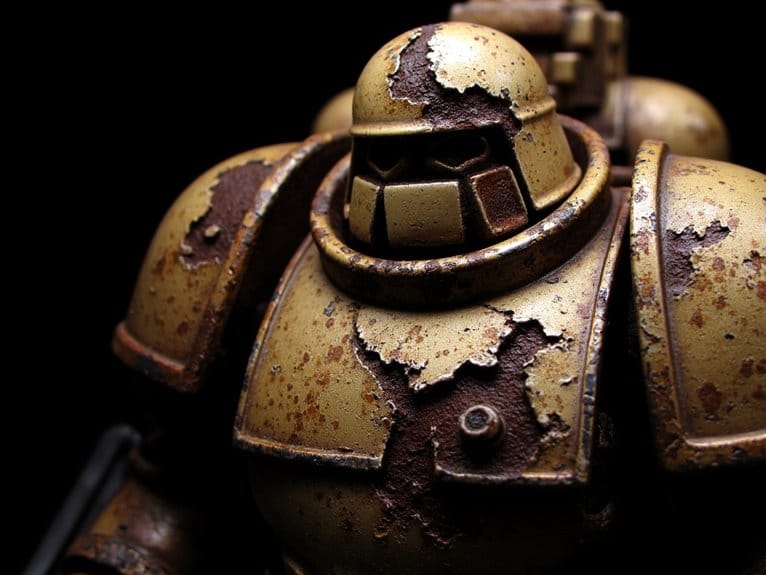
Five fundamental techniques form the backbone of grimdark miniature painting, each contributing essential elements that transform clean models into weathered veterans of endless war.
Oil wash techniques dominate grimdark painting. Mix diluted black and brown paints with odorless white spirit, apply across the entire miniature, then remove excess from raised areas. The wash settles in crevices, creating natural depth and shadow. Allow 48 hours drying time for ideal results.
Oil washes settle naturally into recesses, creating the shadowed depth that defines authentic grimdark weathering effects.
Surface damage requires strategic placement on edges and high-contact areas:
- Apply fine chipping marks using weathering paints for battle-worn armor.
- Combine rust effects with grime using enamel-based paints.
- Create texture paste from bicarbonate, PVA glue, and dark inks.
- Use controlled splatter techniques with stiff brushes for dirt accumulation.
Professional-grade acrylic washes like Vallejo Game Color or Army Painter Warpaints provide consistent flow and enhanced depth for grimdark effects, with their high pigment concentration allowing for more controlled weathering applications. Adding flow improver at a ratio of 1-2 drops per 10 drops of paint enhances the wash’s ability to settle into recesses while maintaining color intensity.
For optimal results, use thinning techniques to achieve proper paint consistency, as many experienced painters recommend adapting formulas for both brush and airbrush applications depending on the weathering effect desired. Contrast paints like Black Legion can accelerate the grimdark process by applying base, shade, and highlight effects simultaneously while maintaining the desaturated tones essential to the aesthetic.
Maintain de-saturated colors throughout, avoiding bright tones except for selective emphasis points.
Color Theory and Palette Selection in Grimdark Painting
Your grimdark palette’s foundation rests on muted earth tones-burnt umbers, desaturated ochres, and weathered grays-that establish the bleakness essential to this aesthetic.
You’ll achieve maximum visual impact by contrasting warm and cool temperatures strategically, placing cold blue-grays against subtle rust-browns to create depth without breaking the somber mood.
This temperature contrast guides the viewer’s eye while maintaining the oppressive atmosphere that defines grimdark miniatures.
Muted Earth Tone Dominance
Earth tones form the backbone of any successful grimdark miniature painting scheme, establishing the bleak atmosphere that defines this aesthetic.
These muted colors create seamless landscape integration while reinforcing the somber character mood essential to grimdark narratives.
Your palette should center on four core earth tone categories:
- Browns and ochres – representing weathered leather, rust, and decay
- Desaturated grays – simulating worn metal and stone surfaces
- Muted greens – depicting corrupted vegetation and tarnished bronze
- Dark neutrals – establishing deep shadows without pure black
This restricted approach maintains tonal harmony across your miniature.
You’ll avoid bright saturated colors except for controlled focal points like glowing eyes or energy weapons.
The subtractive nature of pigment mixing naturally supports these muted results, making earth tones technically easier to blend while achieving the dystopian atmosphere grimdark demands.
Once your grimdark paint scheme is complete, apply a matte varnish to preserve these carefully crafted earth tones while maintaining the non-reflective surface that enhances the realistic weathered appearance.
Strategic Color Temperature Contrast
Three fundamental temperature contrasts will transform your grimdark miniatures from flat monochrome studies into dynamic narrative pieces. Cool blues and purples create shadowed recesses while warm oranges and reds emphasize damage, corruption, or energy sources. This color dynamics approach guides viewer attention to critical story elements.
| Temperature | Application | Grimdark Effect | Technical Notes | Example Colors |
|---|---|---|---|---|
| Cool Shadows | Recessed areas | Creates depth | Applied in 2-3 thin layers | Prussian Blue, Dark Purple |
| Warm Highlights | Raised surfaces | Draws focus | Mixed with base tone | Burnt Orange, Cadmium Red |
| Neutral Base | Mid-tones | Balances contrast | 70% of color coverage | Raw Umber, Payne’s Gray |
| Shift Zones | Edge blending | Prevents harsh lines | Wet-blend technique | Violet, Yellow Ochre |
| Accent Points | Key features | Narrative enhancement | Single brush strokes | Bright Yellow, Crimson |
Temperature contrast transforms static paint into atmospheric storytelling. For optimal results, use water-based acrylics with superior opacity and lightfastness that maintain color intensity while allowing smooth blending between temperature zones. Professional sets with pre-thinned formulas eliminate mixing inconsistencies that can disrupt seamless color temperature transitions. The fade-resistant properties of modern airbrush paints ensure your carefully crafted temperature contrasts maintain their visual impact over time. Using specialized brushes for different temperature zones helps maintain sharp boundaries while preventing unwanted color contamination between warm and cool sections.
Creating Atmosphere Through Light and Shadow Control
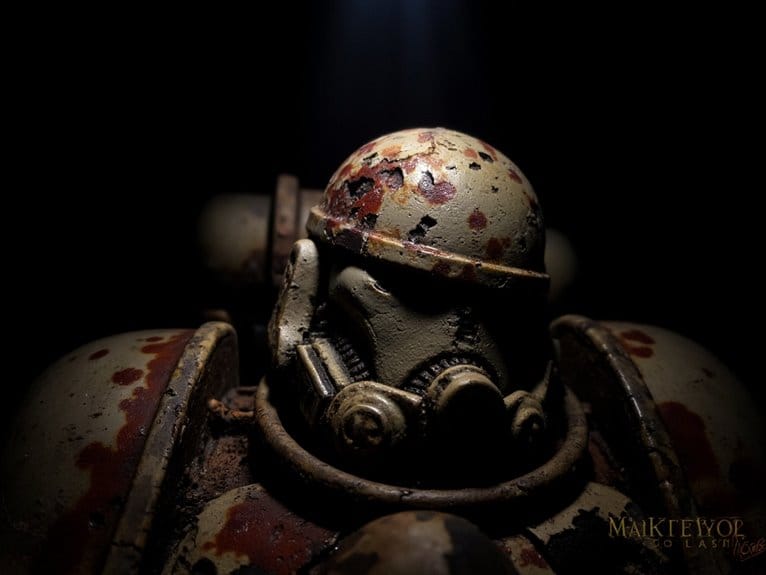
Mastering atmospheric effects in grimdark miniature painting hinges on your ability to manipulate light and shadow with surgical precision. Effective shadow dynamics create visual depth while establishing the oppressive mood that defines grimdark aesthetics.
Atmospheric tension emerges when you balance concentrated darkness against strategically placed highlights.
Essential techniques for controlling light and shadow include:
- Layered wash application – Build shadow depth through multiple thin glazes using black, brown, and greenish-black tones.
- Selective highlight placement – Apply muted edge highlights only to worn surfaces and battle damage.
- Color temperature contrast – Combine cool shadows with warm, subdued highlights for ominous effects.
- Surface finish variation – Mix matte and satin finishes to control light behavior and enhance texture.
These methods simulate natural light behavior while reinforcing grimdark’s characteristic gloom.
Weathering and Texture Methods for Realistic Decay
When you’re building authentic decay into grimdark miniatures, weathering transforms pristine models into battle-worn survivors that tell compelling visual stories.
Oil washes form the foundation of effective weathering techniques. Mix black and brown paints with odorless white spirit, then apply to recesses. Allow 48 hours drying time for proper adherence. Remove excess with q-tips, leaving pigment in crevices.
Texture applications add dimensional realism. Create paste using baking soda, PVA glue, and dark paints for mud effects. Apply around feet and armor creases using sacrificial brushes. For enhanced terrain effects, consider weathering powders that provide fade-resistant properties and work effectively across plastic, metal, and resin surfaces.
Enamel weathering paints like “Dirty Down Rust” provide specialized decay effects with matte finishes. If mistakes occur during application, paint removers designed for miniatures can safely strip coatings without damaging fine details on plastic, resin, and metal surfaces.
Splatter techniques using stiff brushes add environmental wear patterns. Dust pigment powders on lower extremities blend figures naturally with bases. Secure weathering materials permanently using CA glues that bond within 2-5 seconds for immediate adhesion.
Complete your weathered bases by incorporating static grass tufts for realistic terrain that maintains proper scale proportions with your grimdark miniatures.
Thematic Storytelling Through Miniature Composition
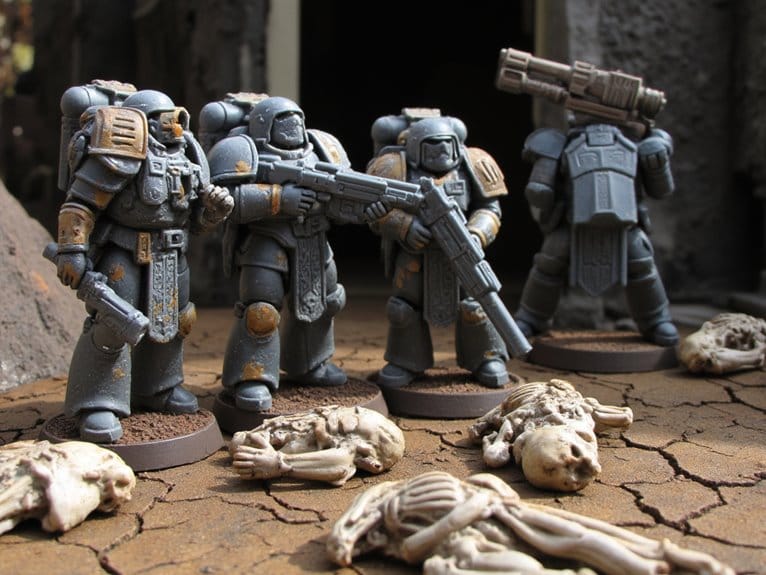
While weathering techniques create surface authenticity, compositional storytelling transforms your miniatures into narrative dynamics that communicate grimdark themes through visual arrangement alone.
Environmental storytelling emerges through strategic placement of debris, skulls, and architectural ruins that suggest ongoing conflict.
Your compositional choices establish clear narrative hierarchy:
- Dynamic poses convey desperation, conflict, or moral ambiguity through body language
- Environmental anchoring uses bleak landscapes and props to establish thematic context
- Strategic lighting employs shadow-light contrasts to frame dramatic tension
- Symbolic elements incorporate skulls, chains, and faction iconography for deeper meaning
Vignetting techniques darken base areas while highlighting focal points like faces or weapons.
Scale contrasts between figures and environment emphasize vulnerability.
Grouping arrangements suggest team dynamics and leadership structures within your grimdark narrative framework.
Tools and Materials for Mastering the Grimdark Style
You’ll need specific tools and materials to achieve authentic grimdark effects that differentiate this style from standard miniature painting approaches.
Your brush selection must include regiment brushes for base coverage, worn brushes for texture application, and old toothbrushes for splatter techniques, while your paint arsenal requires dark acrylics, oil washes, and specialized grimdark shades like “Grim Dark Shadow.”
Success depends on combining these essential brushes and applicators with targeted weathering products and advanced techniques that build atmospheric depth through layered applications. Chemical compatibility between your chosen paints and miniature materials ensures proper adhesion and prevents the weathered effects from peeling or flaking during handling.
For optimal paint adhesion on 3D printed miniatures, consider using matte finish filaments that naturally hide layer lines and provide superior surface texture for detailed weathering work. When selecting pigments for grimdark applications, opacity levels play a crucial role in achieving the desired coverage and translucent layering effects that define this atmospheric painting style.
Maintaining consistent paint quality throughout your grimdark project requires proper mixing techniques, and stainless steel mixing balls can effectively redistribute settled pigments to ensure uniform color application across multiple weathering layers.
Essential Brushes and Applicators
Three categories of brushes form the foundation of any grimdark miniature painter’s toolkit: precision detail brushes, texture application brushes, and specialty applicators. Your brush selection directly impacts your ability to execute specific painting styles effectively.
Detail brushes in sizes 00 and 000 with high-quality sable hair provide the precision needed for facial features and intricate weathering effects. Sable maintains sharp points longer than synthetic alternatives.
Essential applicators for grimdark techniques include:
- Drybrushes – Flat, stiff-bristled brushes for highlighting worn surfaces
- Wash brushes – Soft-bristled tools for applying shadows to recesses
- Blending brushes – Rounded brushes for smooth color gradations
- Sponges – Natural or synthetic applicators for stippling weathering effects
Basecoat brushes in sizes 1-2 establish your initial dark foundation layers with smooth, even coverage. Modern synthetic alternatives offer high-quality nylon bristles that provide excellent color retention and minimal shedding for consistent grimdark applications. Triangular handle brushes provide enhanced grip and control during extended grimdark painting sessions, reducing hand fatigue while maintaining precision. For versatile grimdark applications, specialized drybrush sets with sizes #6 and #13 excel at creating weathering effects across different model scales. Pairing quality brushes with a stable painting handle significantly reduces hand shake and improves control during detailed grimdark work.
Paints and Weathering Products
Since grimdark painting relies heavily on layered weathering effects and muted color palettes, your paint selection becomes the foundation that determines whether you’ll achieve authentic battle-worn realism or merely darkened miniatures.
Acrylic paints provide your base colors. Focus on blacks, greys, browns, and muted earth tones for color manipulation. Oil paints excel for weathering effects due to their extended working time and superior blending properties. Black and brown oil hues create convincing grime layers.
Enamel-based washes like Villainy Ink offer versatile shading with long working times. Mineral spirits enable reductive techniques for precise effect removal.
Texture layering requires specialized products. Mix bicarbonate, PVA glue, and dark paints for battle-worn surfaces. Pigment powders simulate environmental dust. Pastel chalks add realistic dirt textures. Acrylic-based primers ensure proper adhesion between weathering layers, particularly when transitioning between different paint types during the grimdark process.
Matt varnish seals weathering layers while gloss varnish highlights wet surfaces selectively. Matte finishes minimize reflections and provide the subdued appearance essential for authentic grimdark aesthetics. Use paint thinners strategically to achieve proper viscosity control for seamless blending of grimdark effects without compromising the weathered appearance. Quality metallics require higher pigment concentration to achieve convincing worn armor effects with fewer applications during the weathering process.
Advanced Grimdark Techniques
Having established your material foundation, mastering grimdark aesthetics requires precise tool selection and systematic application techniques that transform standard miniatures into battle-hardened warriors.
Advanced layering demands high-quality fine-tip brushes for controlled paint application and seamless gradient alterations. Your arsenal should include experimental techniques that push conventional boundaries.
Essential grimdark mastery tools include:
- Oil wash systems – Homemade mixtures with odorless white spirit create superior recess shading
- Texture paste compounds – Bicarbonate and PVA combinations simulate authentic grime accumulation
- Reductive painting tools – Q-tips and makeup sponges enable selective paint removal for dimensional depth
- Specialized application brushes – Stiff brushes and toothbrushes deliver controlled spattering effects
Allow oil washes 48 hours minimum drying time. Apply texture materials sparingly at logical wear points.
For extensive battle damage and missing limb effects, epoxy putty provides sculptable material that cures without shrinkage while maintaining excellent detail retention for realistic weathering modifications. Professional-grade brushes with double-crimped ferrules resist bristle loosening during intensive weathering work.
When assembling weathered components or attaching battle-damaged elements, cyanoacrylate adhesives ensure secure bonds that withstand handling during subsequent detailing phases. Between painting sessions, maintain your brushes with airbrush cleaner to prevent paint buildup that can compromise fine detail work.
Seal finished work with matte varnish for durability.
On a final note
You’ve now mastered the core principles of grimdark miniature painting. Your understanding of muted color palettes, weathering techniques, and atmospheric lighting will transform ordinary models into compelling narratives. Practice these methods consistently-start with basic rust effects and gradually incorporate advanced texture work. Remember that grimdark isn’t just about making things look dirty; it’s about creating believable stories through visual decay. Your miniatures should feel lived-in and authentic.