We are supported by our audience. When you purchase through links on our site, we may earn an affiliate commission, at no extra cost for you. Learn more. Last update on 20th June 2026 / Images from Amazon Product Advertising API.
Store your miniature painting brushes tip-down immediately after cleaning to prevent moisture damage in the ferrule. Once completely dry, switch to tip-up positioning with protective caps for long-term storage. During painting sessions, use plastic wrap for short breaks or dedicated holders to maintain brush shape. Always clean with lukewarm water and specialized brush soap, then reshape bristles while damp. Proper storage techniques and organizational systems will maximize your brush investment.
Notable Insights
- Store brushes tip-down immediately after cleaning, then horizontally while drying to prevent ferrule damage and bristle deformation.
- Use plastic wrap for short-term storage between painting sessions to keep paint workable and prevent drying.
- Clean brushes with lukewarm water and specialized soap, reshaping bristles into points before drying completely.
- Store dry brushes tip-up in cool, dry environments using holders with individual compartments to prevent bristle entanglement.
- Consider portable cases with elastic loops or foam slots for travel and rotating stands for easy workspace access.
Proper Storage Positioning for Miniature Paint Brushes
When you finish a painting session, the way you position your brushes during storage directly impacts their longevity and performance.
Store your brushes tip-down immediately after cleaning to prevent moisture and paint from settling in the ferrule. This positioning guarantees optimum bristle protection by maintaining natural brush shape and preventing splitting.
During the drying process, position brushes horizontally to avoid water bending the bristles. Once completely dry, you can store brushes tip-up with protective caps installed. This orientation is acceptable for long-term storage and supports effective ferrule maintenance.
Never store brushes with wet paint pointing downward in containers. This causes permanent damage to both bristles and ferrule.
Use dedicated holders during painting sessions to prevent accidental rolling and bristle deformation. For short-term storage between painting sessions, wrap brushes tightly in plastic cling wrap to prevent the paint from drying out.
Apply brush soap and shape the bristles before storing to enhance the cleaning efficiency and maintain the proper point for your next painting session. Consider using brush conditioners that not only clean but also preserve bristle integrity during extended storage periods.
Choose holders with multiple diameter holes to accommodate different brush sizes, as fine detail brushes typically measure 6-8mm while larger brushes range from 12-15mm in handle diameter. The storage bag can also double as a brush stand for added convenience during your painting workflow.
Store brushes in protective cases to maintain their pristine condition and prevent accidental damage during transport or extended storage periods.
Short-Term Storage of Wet Brushes During Painting Sessions
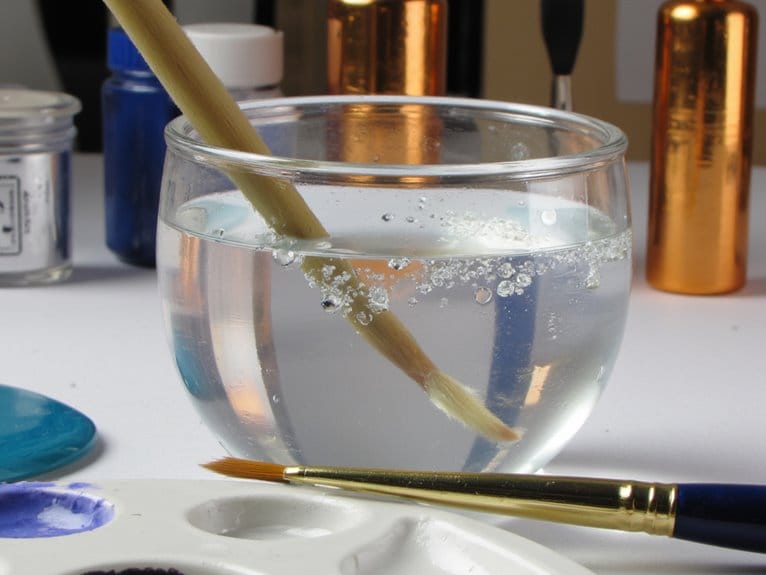
When you’re painting miniatures for extended periods, you’ll need reliable methods to keep your wet brushes in ideal condition during short breaks.
The plastic wrap technique offers a simple yet effective solution for maintaining brush moisture, while specialized porcelain brush holders provide structured support that prevents bristle deformation. Many wet palettes feature built-in brush storage compartments that keep brushes accessible while maintaining proper moisture levels during active painting sessions.
Temperature considerations become critical factors in your workspace setup, as heat fluctuations can rapidly dry paint residues on brush tips or cause condensation that damages ferrules. Store brushes in an upright position to maintain their shape and prevent damage to the bristles during painting sessions.
Plastic Wrap Technique
The plastic wrap technique offers miniature painters a simple yet effective method for preserving wet brushes during active painting sessions. This approach creates an airtight seal that prevents paint from drying on bristles between coats or short breaks.
Plastic wrap benefits include cost-effectiveness and universal availability. The technique works by eliminating air exposure, which causes paint to cure prematurely. Wrapping techniques require removing all air bubbles to form a “second skin” around bristles.
| Step | Action |
|---|---|
| 1 | Flatten bristles and remove excess paint |
| 2 | Wrap plastic tightly around bristle area |
| 3 | Twist excess wrap at handle base |
| 4 | Store upright or flat at room temperature |
| 5 | Unwrap carefully to maintain brush shape |
This method works effectively for acrylic and enamel paints during sessions lasting several hours.
Porcelain Brush Holders
Porcelain brush holders provide an elegant upgrade from plastic wrap for managing wet brushes during active painting sessions. These ceramic stands feature smooth, non-absorbent surfaces that prevent bristle damage while keeping brush tips suspended above your workspace.
You’ll find them shaped to hold brushes horizontally, eliminating rolling and preventing wet paint from creating mess on surfaces.
The aesthetic appeal of porcelain holders enhances your painting environment compared to improvised solutions like mugs or jars. Their moisture resistance makes cleaning simple-just rinse with water and mild soap between sessions.
Unlike plastic alternatives, porcelain won’t absorb paint residues or harbor bacteria over time.
Select holders with appropriate slot sizes for your brush collection. Guarantee stable placement on your work surface to prevent accidents during active painting sessions. When combined with quality painting handles, proper brush storage helps reduce hand fatigue during those extended painting sessions that can last several hours.
Temperature Storage Considerations
Managing temperature during active painting sessions directly affects your brush performance and paint consistency.
Temperature effects become critical when storing wet brushes between coats or during short breaks. Cool temperatures around 5-6°C won’t harm water-based acrylics, but freezing damages paint structure permanently.
Effective moisture control requires managing both temperature and air exposure simultaneously:
- Refrigerator storage: Wrap brushes in airtight cling film before refrigerating to slow drying.
- Insulated containers: Use small coolers to moderate temperature fluctuations during painting sessions.
- Water immersion: Submerge brush heads in containers within the fridge for maximum moisture retention.
- Room temperature wrapping: Seal brushes with plastic wrap for short breaks when refrigeration isn’t available.
Avoid extreme cold below freezing, which degrades acrylic paints and varnishes irreversibly.
Cleaning and Reshaping Techniques Before Storage
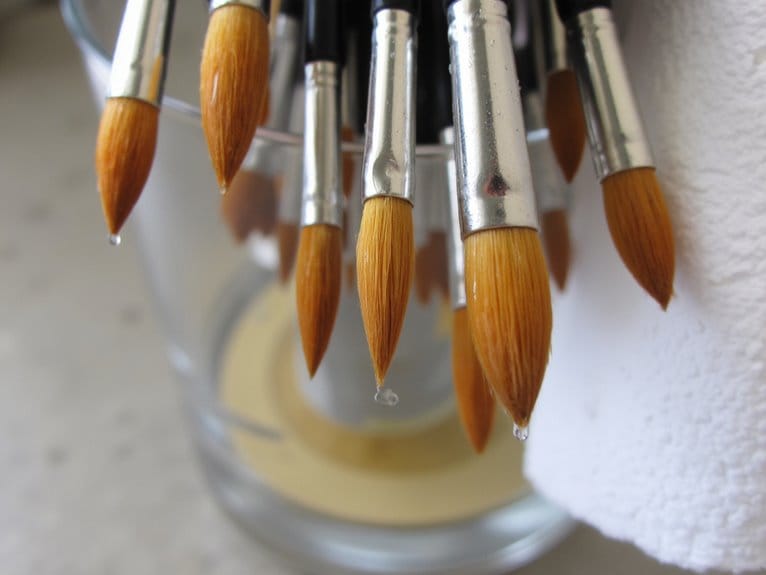
Before storing your miniature painting brushes, proper cleaning removes all paint residue and prevents bristle damage that can ruin expensive brushes. Start with lukewarm water to rinse away most paint without damaging delicate fibers. Hot water causes paint to stick and weakens natural bristles.
| Cleaning Step | Technique |
|---|---|
| Initial Rinse | Lukewarm water, gentle swirling motions |
| Deep Clean | Specialized brush soap worked to ferrule |
| Soap Removal | Thorough rinsing until water runs clear |
| Drying Prep | Gentle tapping on paper towel |
Apply specialized brush soaps like Masters Brush Soap using side-to-side rolling motions until lather appears white. These cleaning methods guarantee complete paint removal. For reshaping techniques, form bristles into sharp points using your fingers while horizontal. Leave thin soap residue to condition fibers and maintain shape during drying. Whether you’re painting detailed battle sequences on your miniatures or working on simpler base coats, maintaining brush quality ensures consistent results across all your projects. To prevent bristle shedding and maintain quality through multiple cleanings, inspect ferrules regularly for any loosening that could compromise brush performance. For stubborn acrylic residue that regular soap cannot remove, consider using concentrated formulas specifically designed for water-based paints. Proper storage recommendations help prevent wear and prolong the lifespan of your rust-proof ferrules and expensive natural hair brushes.
Types of Brush Organizers and Their Features
After you’ve properly cleaned and shaped your brushes, selecting the right storage system protects your investment and maintains brush performance over time.
Different organization styles offer unique storage benefits depending on your workspace needs and painting habits.
Traditional holders accommodate 27-49 brushes in compact 5.5-inch diameter designs. Rack organizers provide vertical storage with adjustable spacing to prevent bristle damage. Portable cases feature elastic loops and water-resistant materials for travel protection. Magnetic systems offer customizable layouts with modern aesthetics.
Consider these key storage options:
- Desktop holders – Rotating bamboo cylinders with multiple brush compartments
- Modular racks – Adjustable wooden stands with tiered slot configurations
- Travel rolls – Zippered fabric cases with individual brush protection loops
- Drawer inserts – Foam-lined organizers fitting standard desk dimensions
Each system balances accessibility, protection, and workspace efficiency for ideal brush preservation.
Many miniature painters prefer multifunctional racks that combine brush storage with paint organization, with popular models like the Army Painter Paint Station accommodating various brush types alongside 50 paint bottles.
Long-Term Dry Storage Best Practices
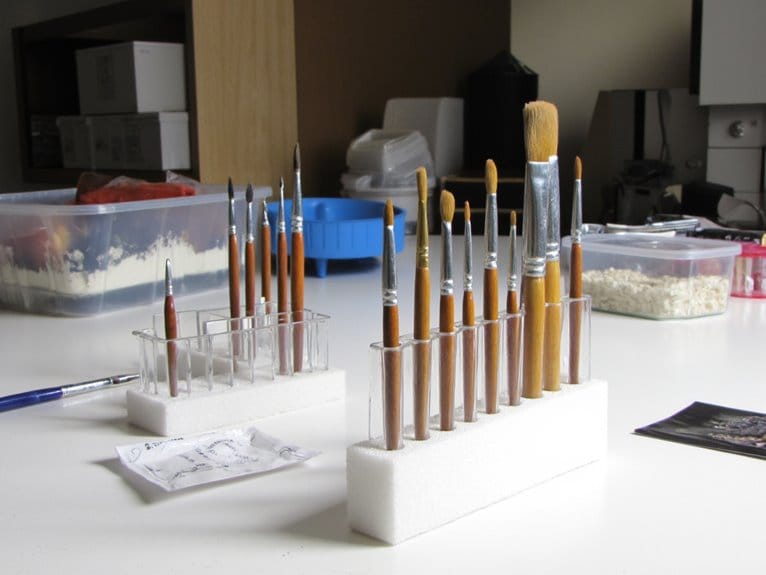
While short-term storage focuses on daily accessibility, long-term preservation requires systematic preparation that prevents irreversible damage to your miniature painting brushes.
Start with complete paint residue removal using dedicated brush soap, preventing acrylic hardening that destroys bristle flexibility.
Dry brushes horizontally or bristles-down to maintain tip shape and prevent ferrule water accumulation. Reshape damp brush tips gently with paper towels before complete drying. This bristle protection maintains precision pointing essential for detail work.
Store in cool, dry environments away from direct sunlight and humidity fluctuations. Moisture prevention requires completely dry brushes before storage to avoid mold growth and ferrule rust.
Use individual sleeves or compartments to prevent bristle entanglement. Arrange brushes upright with bristles uncompressed.
Apply occasional conditioner to natural hair brushes, maintaining flexibility during extended storage periods. Consider waterproof adhesives for sealing storage containers that will protect your brushes from humidity and moisture exposure.
Portable and DIY Storage Solutions for Miniature Painters
You don’t need expensive commercial solutions when simple DIY brush racks can protect your miniature painting brushes just as effectively.
A foam board with precisely cut slots holds brushes upright while preventing bristle contact, and you can customize slot dimensions to match your exact brush collection.
When you’re painting away from home, portable storage cases with individual compartments keep your premium brushes safe during transport to conventions or painting sessions. Cases with removable trays offer flexible organization options that can accommodate various brush sizes and additional painting supplies. Sets like Anezus offer individual storage tubes that provide excellent portability for traveling painters.
For detail work and precision tasks, precision tweezers stored alongside your brushes provide essential support for handling small components and positioning delicate elements during miniature painting projects. Additionally, clamp-mount magnifiers with adjustable swing arms can be positioned alongside your brush storage to provide hands-free magnification during intricate painting work.
DIY Brush Rack Ideas
Building your own brush storage system offers complete control over size, layout, and functionality while keeping costs minimal. You can create custom solutions using various materials and methods tailored to your specific brush collection.
Four Popular DIY Brush Storage Approaches:
- Wooden holders crafted from plywood with laser cutting for precise holes accommodating different brush sizes.
- PVC tubes cut into rings and glued together forming compartments that protect brush bristles when handles insert first.
- Foam racks carved from thick foam board using knives or drills, then painted black for improved aesthetics.
- 3D printing custom modular designs with labeled tabs for paint identification and vertical storage optimization.
Repurposed items like nail polish racks or old drawers provide cost-effective alternatives.
Digital templates enable repeatability across projects.
When designing your DIY solution, consider creating brush slots that are deep enough to prevent longer brushes from tipping over, as shallow compartments can cause instability issues. Additionally, ensure your storage system provides proper ventilation to prevent moisture buildup, which can damage both brushes and water-based paints used in miniature painting.
Portable Storage Cases
Five distinct categories of portable brush storage cases address different mobility needs and workspace constraints for miniature painters.
Acrylic cases feature up to 49 slots in compact 5.5-inch diameter designs with rotating bases for easy access. These clear organizers provide durability and visibility while maintaining affordable pricing.
Bamboo holders offer eco-friendly alternatives with 360-degree rotation and approximately 27 holes for stylish storage.
Travel rolls utilize canvas or fabric materials for horizontal brush storage, protecting bristles during transport. Canvas materials provide excellent moisture absorption prevention, helping maintain brush quality during extended travel periods.
Multi purpose bags incorporate water-resistant fabrics with reinforced pockets and secure closures for backpack portability. Proper surface preparation ensures your workspace remains clean and ready for immediate painting when setting up portable stations in various locations.
Portable stations combine integrated brush holders with paint storage compartments, supporting standard 18mL bottles. Fabric organizers clean easily and accommodate wet brushes temporarily without damage. These comprehensive storage systems align with the assembly and painting requirements found across various miniature warfare sets.
When organizing your portable workspace, consider including precision tweezers alongside your brushes for detailed miniature work and component handling during painting sessions.
On a final note
You’ve learned the essential techniques for preserving your miniature brushes through proper storage methods. Implement vertical positioning for wet brushes during sessions. Clean and reshape tips before long-term storage. Choose organizers that protect ferrules and maintain bristle alignment. Store dry brushes horizontally or tip-up to prevent damage. Regular maintenance extends brush lifespan considerably. Apply these storage practices consistently, and you’ll maintain sharp points and ideal paint application performance for years.