We are supported by our audience. When you purchase through links on our site, we may earn an affiliate commission, at no extra cost for you. Learn more. Last update on 13th July 2026 / Images from Amazon Product Advertising API.
Store your acrylic paints in airtight containers at temperatures between 65°F and 75°F with humidity levels of 40-60%. Keep them away from direct sunlight and fluorescent lighting to prevent color shifts and pigment breakdown. Use original manufacturer containers when possible, or transfer to mason jars with rubber sealing rings for superior moisture protection. Professional-grade acrylics last 5-7 years under proper conditions, while hobbyist paints typically remain usable for 2-5 years when you follow these thorough storage protocols.
Notable Insights
- Store acrylic paint in temperatures between 65°F-75°F with 40-60% humidity, away from direct sunlight and heat sources.
- Keep paint in original containers or airtight alternatives like mason jars to prevent air exposure and drying.
- Maintain proper sealing by cleaning container rims thoroughly and storing containers upright to minimize seal pressure.
- Professional-grade acrylics last 5-7 years while hobbyist paints typically last 2-5 years under ideal storage conditions.
- Monitor paint regularly for sour odors, texture changes, or separation, and label containers with dates for tracking.
Choosing the Right Storage Environment
When you’re storing acrylic paint properly, the environment plays an essential role in maintaining paint quality and extending shelf life. Multiple environmental factors directly impact paint performance and longevity.
You’ll need to maintain temperatures between 65°F and 75°F (18°C–24°C). This range prevents pigment separation and chemical degradation.
Humidity levels should stay between 40% and 60% to avoid mold growth while preventing paint from thickening excessively.
Storage locations must offer protection from direct sunlight and UV exposure, which cause color shifts and additive breakdown. Additionally, avoid areas with fluorescent lighting as these can expose paints to harmful UV rays.
Choose well-ventilated areas away from heat sources like radiators or ovens. Avoid damp spaces such as basements, bathrooms, or laundry rooms where moisture fluctuates. Keep paints away from exposed wood or concrete surfaces to prevent additional moisture exposure.
Stable conditions preserve paint texture and drying properties effectively.
Selecting Appropriate Containers for Paint Storage
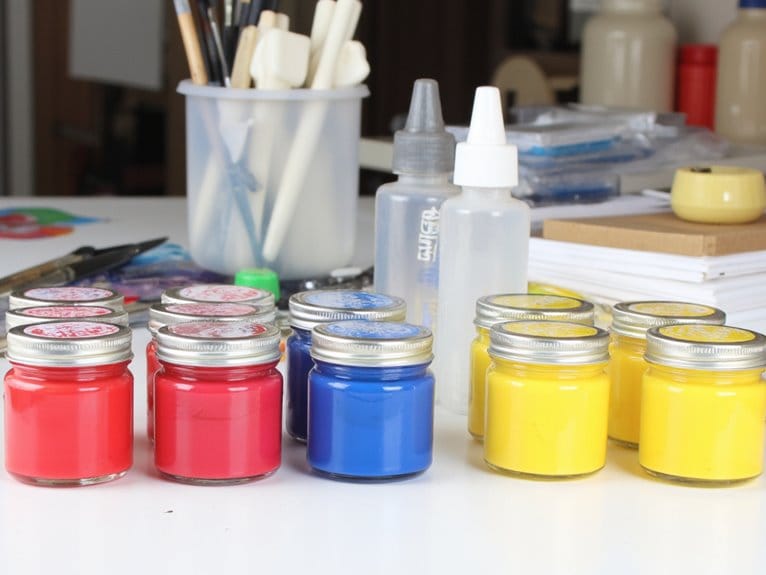
Your choice of storage container directly impacts how long your acrylic paint remains usable and maintains its original consistency.
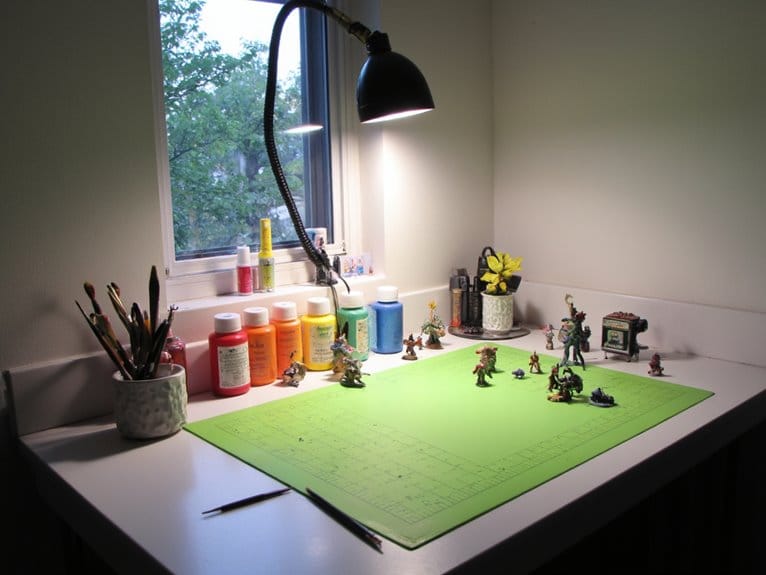
You’ll find that keeping paint in its original manufacturer containers offers the best protection, but you can also use household alternatives like mason jars or specimen cups when original containers fail or when you need to store custom color mixtures. For serious painters who work with numerous colors, consider investing in an acrylic paint holder that organizes your 2 oz. bottles while providing easy visibility and access to your entire color palette. Step-wise or tiered designs enhance paint visibility and allow you to quickly identify and select the exact color you need during your painting sessions.
The most critical requirement for any container you select is an airtight seal that prevents air exposure, which causes paint to dry out and develop skin formation within days of improper storage. For painters frequently working with the same colors, wet palettes can keep acrylic paint workable for 8+ hours and reduce waste by 60-80% compared to traditional dry palettes. When selecting multi-brand storage, look for organizers with universal compatibility that accommodate different bottle sizes from manufacturers like Citadel, Vallejo, and Army Painter.
Original Container Benefits
Although transferring acrylic paint to alternative containers might seem convenient, you’ll get the best results by keeping your paints in their original packaging. Original containers provide superior paint freshness through factory seals that prevent air exposure and contamination. These durable materials resist chemical reactions while offering ideal dispensing through controlled flow mechanisms.
| Feature | Technical Benefit | User Advantage |
|---|---|---|
| Airtight Seals | Prevents solvent evaporation | Maintains paint consistency |
| Usage Labels | Provides pigment/safety data | Guarantees proper identification |
| Design Efficiency | Stackable, uniform sizing | Compatible storage solutions |
| Pigment Protection | Light-resistant materials | Prevents color degradation |
The modular design enables accessibility enhancement through specialized storage solutions. Visual display windows aid color selection while maintaining pigment protection. Many sets include innovative packaging that aids in mixing, with designs facilitating easy application and color management. This combination of safety handling features and risk reduction makes original containers the ideal choice for serious artists. Professional paint sets often feature water-based formulas that maintain stability better when stored in their original containers with proper sealing mechanisms. When working with high-concentration pigments found in quality acrylic paints, maintaining the integrity of the original container becomes even more critical for preserving color intensity and preventing contamination. Quality paint manufacturers design containers with dropper bottle systems that provide precise application control while minimizing air exposure during use.
Household Container Options
Several budget-friendly household containers can effectively store acrylic paints when original packaging isn’t available or practical for your workspace needs.
Repurposing crates from thrift stores creates organized color-coded sections, with standing arrangements maximizing visual access. Using bottles like clear squeeze containers or empty paint tubes preserves leftover paint while maintaining transparency for color identification.
PVC solutions involve cutting pipe segments to match bottle dimensions, creating modular storage channels that mount on walls or shelves.
Rolling organizers provide workspace mobility and compact storage when not in use. Tiered storage systems increase surface area utilization while keeping frequently used colors accessible.
For dedicated solutions, specialized holders accommodate 64-168 standard 2oz bottles with wall-mounting options, while high-capacity boxes hold up to 30 bottles each.
Airtight Seal Requirements
When acrylic paint loses its airtight seal, it’ll dry out within hours and form an unusable skin on the surface. You need containers with reliable airtight properties to preserve paint consistency and prevent wastage.
Glass jars with rubber sealing rings provide superior moisture prevention compared to basic plastic containers. Look for gasket-lined lids that create flexible barriers against air ingress.
Screw-on and snap-tight designs offer different sealing mechanisms-screw-ons provide adjustable compression while snap-tight lids deliver consistent pressure.
Specialized paint storage containers feature double-layer seals for enhanced protection. Flip-top bottles maintain airtightness between frequent uses.
You should clean container rims thoroughly before sealing and replace worn gaskets immediately. Store containers upright to minimize seal pressure and prevent leaks.
Managing Mixed and Opened Acrylic Paints
Once you’ve mixed custom colors or opened fresh tubes, proper storage becomes critical for maintaining paint quality and preventing waste.
Your paint mixing techniques directly impact storage success. Store mixed paints without water dilution to extend shelf life and preserve consistency. Add water only immediately before use.
Effective paint preservation methods require airtight containers like small glass jars or repurposed plastic containers. Cover paint surfaces directly with cling film before sealing to minimize air contact.
Screw caps on tightly after each use and wipe tube threads clean to prevent dried paint buildup.
Store opened tubes upright when possible to reduce internal air exposure. Keep stored paints in cool, dry environments between 65°-75°F.
Avoid refrigeration, which causes moisture condensation and potential mold growth.
If your stored paints begin to thicken, use paint thinners specifically designed for acrylics to restore proper consistency without compromising adhesion or color integrity.
Controlling Temperature and Humidity Levels
Temperature and humidity control forms the foundation of successful long-term acrylic paint storage, directly affecting paint stability and usability.
You’ll need to maintain temperatures between 65°F and 75°F (18°C – 24°C) for ideal results.
Temperatures below 40°F (4°C) cause brittleness and instability, while exceeding 80°F (26°C) risks premature drying and consistency changes.
Effective humidity control requires maintaining 40-60% relative humidity levels.
Higher humidity promotes rust on metal containers and label degradation.
Temperature monitoring prevents costly paint separation and film breakdown that occurs with frequent fluctuations.
Store paints in climate-controlled indoor spaces away from basements, attics, and garages.
Dehumidifiers help maintain stable conditions.
This controlled environment preserves original texture and color intensity while extending paint lifespan considerably.
Maximizing Paint Shelf Life and Longevity
You can greatly extend your acrylic paint’s usable life by implementing proper sealing techniques that prevent air exposure and moisture loss.
The key lies in creating airtight storage conditions and understanding how long different paint formulations remain viable under ideal storage conditions.
These practices will help you avoid the frustration of discovering dried, unusable paint when you’re ready to create your next masterpiece.
Quality acrylic paints with high pigmentation maintain their consistency and color integrity longer when stored properly compared to lower-grade alternatives.
Specialized acrylic paints like ready-to-spray formulas often have different storage requirements than traditional acrylics due to their pre-thinned consistency and specific viscosity properties.
Proper Sealing Techniques
Master application techniques by cleaning surfaces thoroughly and guaranteeing complete paint drying before sealing.
Apply thin, even coats using soft brushes with single-direction strokes to avoid bubbles and streaks. For spray applications, work in well-ventilated areas.
Multiple thin layers provide superior protection compared to thick single coats. Allow complete drying between applications following manufacturer specifications to prevent tackiness and guarantee proper adhesion for maximum long-term protection.
Storage Duration Tips
Once you’ve properly sealed your paint containers, controlling storage conditions becomes the determining factor in maximizing shelf life. Temperature stability between 60°F and 80°F prevents degradation and separation. Humidity control stops microbial growth that compromises paint quality.
| Storage Condition | Ideal Range | Impact on Longevity |
|---|---|---|
| Temperature | 65°F-75°F | Prevents separation/coagulation |
| Humidity | Low/Dry | Stops mold growth |
| Contamination | Zero exposure | Maintains chemical integrity |
For long term storage, you’ll achieve 5-7 years with professional-grade acrylics under ideal conditions. Hobbyist paints last 2-5 years. Monitor paint smell and texture regularly-sour odors indicate spoilage. Avoid temperature fluctuations and moisture exposure in basements or garages. Proper environmental control extends usability well beyond manufacturer estimates.
Essential Maintenance Practices for Stored Paint
While proper initial storage sets the foundation for paint longevity, ongoing maintenance practices determine whether your acrylic paints remain usable for months or years. Effective paint maintenance requires systematic cleaning routines that start before storage begins.
Clean paint residues from container lids and rims thoroughly before sealing. This prevents contamination and guarantees airtight closure. Inspect stored paints periodically for consistency changes or separation-remix or thin appropriately before use.
Remove excess paint from palettes immediately to prevent hardened residues. Store brushes properly to avoid introducing dirt into containers. Clean spills promptly to prevent staining storage surfaces.
Label containers clearly with product information and dates for easy identification. Check storage environments regularly, adjusting conditions to maintain ideal temperature and humidity levels for continued paint quality.
On a final note
You’ve now learned the essential techniques for proper acrylic paint storage. Following these practices will extend your paint’s usable life from months to years. Store containers at 65-75°F with 40-60% humidity levels. Seal opened tubes tightly and transfer mixed paints to airtight containers within 24 hours. Check stored paints monthly for consistency changes. These methods protect your investment and guarantee you’ll have quality paint ready for your next project.