We are supported by our audience. When you purchase through links on our site, we may earn an affiliate commission, at no extra cost for you. Learn more. Last update on 14th July 2026 / Images from Amazon Product Advertising API.
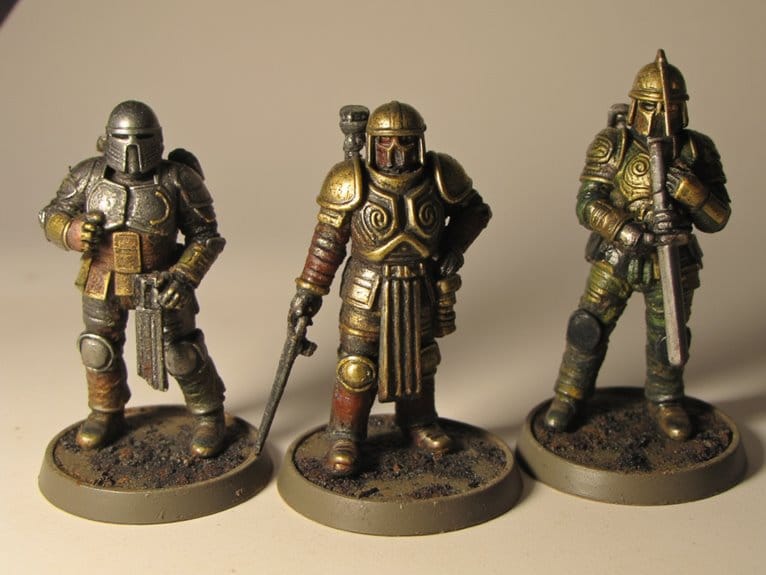
Non-Metallic Metal (NMM) is a miniature painting technique that creates convincing metallic surfaces using standard acrylic paints instead of metallic ones. You’ll achieve this illusion through strategic placement of extreme highlights and deep shadows that simulate how light reflects off metal surfaces. The technique requires mastering light source positioning, dramatic value contrast, and precise color control to fool the eye into seeing steel, gold, or bronze. This advanced method demands exceptional blending skills and understanding of color theory to render realistic metallic effects through visual perception tricks alone, offering greater artistic control than traditional metallic paints.
Notable Insights
- NMM creates the illusion of metallic surfaces using standard paints instead of actual metallic paints with mica flakes.
- The technique relies on strategic highlight and shadow placement to simulate how light reflects off metal surfaces.
- Success requires mastering extreme value contrast between the brightest highlights and deepest shadows for realistic effects.
- NMM demands consistent light source direction and advanced color theory knowledge, making it more complex than metallic paints.
- The method uses visual perception tricks and glazing techniques to achieve professional-looking metallic finishes on miniatures.
Understanding the Fundamentals of Non-Metallic Metal Technique
When examining miniature painting techniques, Non-Metallic Metal (NMM) stands as one of the most challenging yet rewarding approaches you can master. This technique creates metallic surfaces using standard paints instead of metallic ones. You’ll achieve the illusion through carefully painted reflections and highlights that mimic how light behaves on metal.
NMM treats your 3D miniature as a 2D painting challenge. You’ll control color contrast between bright highlights and deep shadows to simulate reflective surfaces. The technique relies on visual perception tricks rather than actual metallic shimmer. You’ll paint sharp, defined reflection shapes instead of relying on paint particles to catch light.
This approach demands understanding light interaction with different metals. You’ll study reference materials showing how bronze, steel, and gold reflect light differently, then replicate these patterns through precise color placement. Unlike True Metallic Metal techniques that use reflective materials like mica in the paint formulation, NMM achieves its effects purely through skillful color application. You can simplify the painting process by imagining 4 light points around your model to determine where highlights should be placed. Many miniature painters enhance their NMM work using layering and blending techniques to create smooth transitions between light and shadow areas.
Core Principles Behind Creating Realistic Metal Effects
Your success with NMM depends entirely on mastering light source positioning and strategic highlight placement.
You’ll need to establish a single, consistent light direction and commit to it throughout your entire paint job-this means highlights appear only where that light source would naturally strike raised edges, curves, and protruding surfaces.
The contrast between your brightest highlights and deepest shadows must be dramatic, often spanning the full range from near-white to near-black, because this extreme value range is what tricks the eye into seeing reflective metal instead of painted plastic. Glazing techniques help create these smooth transitions between light and dark values without harsh edges that would break the metallic illusion.
Light Source Positioning
Three fundamental principles govern light source positioning in NMM painting: direction, intensity, and consistency. You’ll achieve the most realistic effects by placing your primary light source directly above your miniature, simulating natural sunlight conditions.
Light intensity determines where you’ll place your brightest highlights and deepest shadows. Strong directional lighting creates concentrated reflection spots on metal surfaces facing the source, while areas turned away receive deeper shading. Angular reflections follow predictable patterns based on your light’s position relative to curved and flat surfaces.
| Light Position | Highlight Placement | Shadow Areas |
|---|---|---|
| Top-down | Horizontal surfaces, raised edges | Undercuts, recessed details |
| Side angle | Vertical faces toward source | Opposite vertical faces |
| Multiple sources | Complex overlapping patterns | Varied shadow depths |
You’ll need consistent light direction throughout your piece to maintain the illusion of realistic metal reflections.
Contrast and Highlight Placement
Use crisp edges on your highlights with minimal blending.
Layer your paint thin, building highlight strength gradually through multiple coats.
Position midtones strategically between extremes to maintain volume while preserving the sharp contrast essential for believable metal illusion.
Key Differences Between NMM and True Metallic Metal Paints
When you’re choosing between NMM and True Metallic Metal (TMM) paints for your miniatures, you’re selecting fundamentally different approaches to creating metallic effects.
NMM uses standard acrylics without metallic pigments, creating metal illusions through painted highlights and shadows. TMM employs actual metallic flakes or mica particles that produce genuine reflective qualities. This fundamental difference affects everything from application technique to final appearance.
| Aspect | NMM | TMM |
|---|---|---|
| Paint Composition | Standard acrylics without metallic pigments | Contains mica or metallic flakes |
| Light Interaction | Painted illusion of reflections | True reflective properties |
| Skill Requirement | Advanced color theory knowledge needed | More beginner-friendly |
| Lighting Consistency | Maintains appearance under varying light | Changes with lighting conditions |
| Time Investment | Requires multiple layering sessions | Faster coverage for large areas |
NMM advantages include complete artistic control and consistent photographic results. TMM applications excel in time efficiency and natural metallic authenticity. Quality TMM paints typically achieve professional results with just 1-2 thin coats thanks to their superior pigment concentration. For professional metallic finishes, many painters rely on specialized metallic color sets that deliver exceptional pigmentation and adherence to miniature surfaces. Many airbrush paint sets include specialized metallic options with superior opacity that work exceptionally well for achieving seamless TMM coverage on larger miniature surfaces. Both approaches benefit from using paints with strong adhesion properties to prevent chipping during handling.
Essential Methods and Techniques for NMM Application
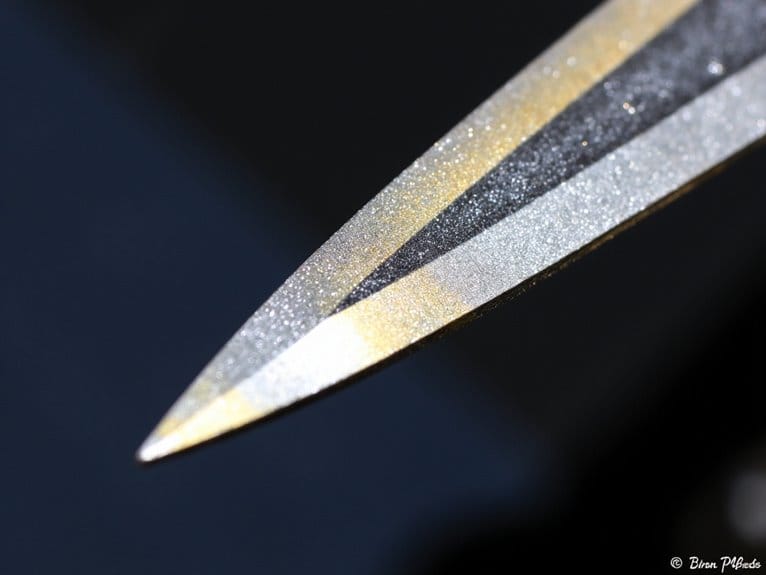
Mastering NMM requires understanding that metal surfaces behave fundamentally differently from other materials when interacting with light.
You’ll need to create strong contrasts between highlights and shadows rather than relying on metallic pigments for reflection effects.
Your color selection forms the foundation of convincing NMM. Use the Flexible Colour Triad method to establish complementary shade palettes.
Color choice determines whether your NMM achieves realism or falls flat-master complementary triads for authentic metallic surfaces.
Select Carnelian Skin for bronze bases or grayscale ranges for silver finishes. Incorporate non-traditional hues like blues in silver for cooler effects.
Effective layering techniques involve applying extremely thin paint layers gradually.
Build up color through multiple glazes rather than thick applications. Use fine detail brushes for precise highlight placement on edges and curves.
Position “white hot spot” highlights strategically where light naturally catches raised surfaces and points.
Benefits and Artistic Advantages of Mastering NMM
Once you’ve mastered NMM techniques, you’ll gain unprecedented control over how metallic surfaces appear on your miniatures regardless of viewing conditions.
This artistic expression method delivers consistent results under any lighting setup while developing your fundamental painting skills.
The primary advantages include:
- Enhanced Visual Control – You’ll create custom lighting effects independent of actual environmental conditions.
- Superior Skill Development – Advanced color theory knowledge and precision brushwork improve dramatically.
- Increased Color Adaptability – Seamless blending mimics various metallic finishes without paint limitations.
- Professional Recognition – Technical mastery distinguishes your work within competitive miniature painting communities.
NMM eliminates metallic paint issues like flaking or uneven dispersion.
You’ll achieve reproducible results across multiple miniatures while building artistic prestige through this challenging technique.
Common Challenges and Skills Required for Success
Despite these significant advantages, NMM presents substantial technical hurdles that separate novice painters from experienced practitioners.
You’ll need precise control over highlights and shadows to convincingly mimic metal reflections using only non-metallic paints. Strong contrast between your darkest shadows and brightest highlights creates the illusion of reflectivity.
Mastering NMM demands extreme value contrast-your deepest shadows against brilliant highlights forge the critical illusion of metallic reflection.
The painting psychology aspect challenges your natural visual instincts. Your brain’s habitual interpretation of light can mislead you, requiring conscious counter-intuitive approaches to value placement. Visual training becomes essential-you must “retrain” your eye to paint what metallic surfaces should reflect, not what memory assumes they look like.
Multiple technical skills converge: skillful blending, consistent light source direction, and strict color value control. Proper preparation with cleaning brushes before use minimizes bristle shedding and ensures optimal paint application throughout these demanding techniques.
You’ll need patience for methodical work in small sections while maintaining spatial perception for complex miniature surfaces. Having specialized brushes like liners and detail rounds becomes crucial for achieving the precise control necessary for successful NMM techniques. The ergonomic design of precision brushes helps reduce hand fatigue during these extended painting sessions that demand unwavering steady control.
A well-organized paint organizer helps maintain focus during these complex techniques by keeping your carefully mixed color values easily accessible and preventing workflow interruptions.
On a final note
You’ve now mastered the core concepts of non-metallic metal painting. This technique demands precise light placement, contrast control, and color temperature understanding. While NMM requires more skill than metallic paints, it’ll give you superior photographic results and artistic control. Practice gradient blending and highlight positioning consistently. Your miniatures won’t reflect camera flash, and you’ll achieve realistic metal effects that enhance your model’s overall visual impact and competition potential.