We are supported by our audience. When you purchase through links on our site, we may earn an affiliate commission, at no extra cost for you. Learn more. Last update on 20th June 2026 / Images from Amazon Product Advertising API.
Choose black primer for miniatures with dark color schemes or when you want natural shadows and enhanced depth, as it creates inherent contrast effects. Select white primer when painting bright colors like yellows, pastels, or light blues since it maximizes vibrancy by reflecting light through paint layers. Grey primer offers the most versatile option, working effectively with both light and dark colors while camouflaging minor errors better than high-contrast alternatives. Understanding advanced application techniques will optimize your results further.
Notable Insights
- Black primer creates natural shadows and depth but requires more coats for bright colors to maintain vibrancy.
- White primer maximizes color brightness and reduces paint layers needed for yellows, pastels, and light colors.
- Grey primer offers balanced versatility, working well with both light and dark colors while hiding minor mistakes.
- Colored primers matching your army scheme can reduce required paint layers by 30-50% when selected correctly.
- Consider material type: acrylic primers work for plastic miniatures while metal may need solvent-based options.
Understanding How Primer Color Affects Your Paint Job
When you’re selecting primer for your miniatures, the color choice directly determines how your final paint layers will appear and perform.
Dark primers naturally mute paint colors, creating subdued tones that enhance shadows but reduce vibrancy. White primers maximize color saturation and brightness, making them ideal for vibrant schemes but potentially causing chalky appearances without proper technique.
Grey primers offer neutral coverage that balances both effects, reducing layer requirements for medium tones. These primer color effects greatly influence your workflow efficiency.
Grey primers provide the perfect middle ground, streamlining your painting process by minimizing coats needed for balanced color coverage.
Dark bases require fewer coats for dark colors but struggle with light applications. White bases excel with bright colors but need additional thin layers for proper coverage. Black primer is particularly forgiving for missed areas since it creates natural shadows that help conceal incomplete coverage.
Most painter preferences lean toward grey for versatility, though specific projects benefit from targeted primer choices that complement the intended color scheme. Satin primer layers work particularly well with speedpaints and contrast paints, offering better flow and coverage than purely matte finishes.
Acrylic-based primers provide superior adhesion and durability under gaming conditions while maintaining compatibility with various application methods. High-quality acrylic paints perform best when applied over properly prepared primer surfaces, ensuring maximum pigmentation and color vibrancy. Maintaining clean nozzles ensures consistent spray patterns and prevents clogging that can affect primer application quality.
Black Primer: Creating Natural Shadows and Depth
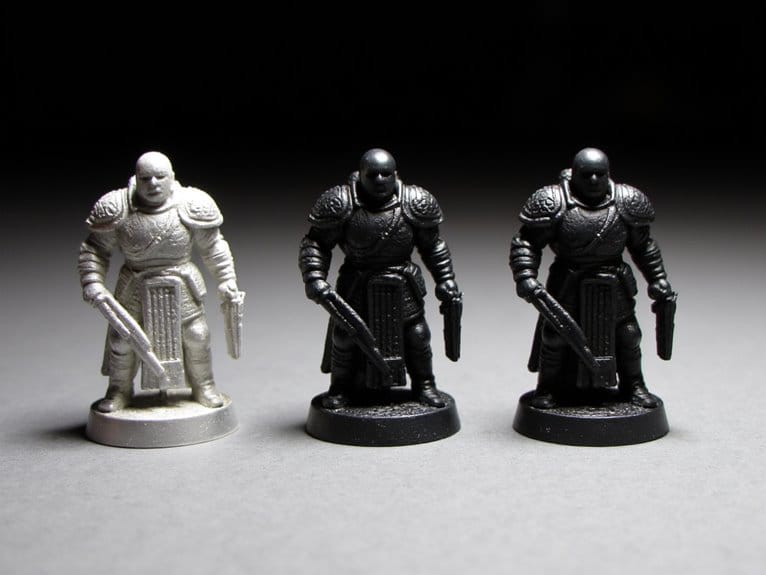
Black primer fundamentally changes how light interacts with your miniature’s surface, creating an inherent shadow effect that enhances dimensional depth without additional work. This dark foundation naturally builds shadow details into recesses and valleys, eliminating the need for extensive base shading work.
Key advantages of black primer include:
- Faster dark color application – Blues, greys, and purples require fewer coats
- Enhanced weathering effects – Battle damage and grime appear more realistic
- Superior metallic contrast – Silver and gold colors pop against dark backgrounds
- Built-in error forgiveness – Missed spots blend naturally into shadows
However, black primer demands advanced layering techniques. You’ll need multiple highlight passes to achieve color vibrancy. The enhanced highlight visibility from this dark base makes it easier to identify where your brightest points should go during the painting process.
Bright colors like yellow require three to four coats for true intensity. Professional-grade black paint like Vallejo Model Color provides the precision application and complete opacity needed for consistent primer coverage. Using a wet palette during extended painting sessions helps maintain paint consistency and prevents waste. The Army Painter offers black primer options that combine primer and color for efficient coverage. Before sealing your work with matte finishes, ensure proper drying between coats to achieve optimal color saturation.
White Primer: Maximizing Color Vibrancy and Brightness
White primer functions as the opposite approach to black primer, creating a bright foundation that maximizes color vibrancy across your miniature’s surface.
You’ll achieve enhanced color saturation because white reflects light back through your paint layers, making colors appear more vivid and true to their intended hue.
This primer choice becomes essential when you’re working with light color applications like yellows, pastels, or bright blues that would otherwise appear muted or require multiple coats over darker bases.
Enhanced Color Saturation
The ideal choice for achieving maximum color vibrancy on miniatures is white primer, which serves as the foundation for the brightest and most saturated paint finishes possible.
White primer works with color theory principles by reflecting all wavelengths of light back through your paint layers. This creates saturation benefits you can’t achieve with darker primers.
The enhanced saturation effects include:
- Bright colors retain full intensity without dulling or muting
- Wide-range hue compatibility allows vivid yellows, oranges, and reds to pop
- Optimized light reflection maximizes visual contrast on finished models
- Superior luminosity creates eye-catching paint jobs that stand out
Your paint’s true colors emerge when applied over white primer.
Even transparent glazes maintain their intended vibrancy instead of appearing muddy or subdued.
White primer is particularly effective when using contrast paints, which achieve their best results over light primers by delivering professional-quality finishes with vivid colors in a single application. These specialized paints achieve base color, shading, and highlighting in one application, eliminating complex layering techniques.
When selecting your paint colors, focus on paints with good flow consistency and high opacity to ensure smooth application over your white primer base.
Light Color Applications
When working with pastels, yellows, oranges, and other light hues, you’ll find that white primer transforms your painting experience entirely. The reflective base maximizes color saturation while reducing the number of coats needed for opacity.
Light colors achieve full vibrancy in two to three thin layers instead of four to five over darker primers. Strategic layering becomes more efficient with white primer’s natural brightness enhancement.
You’ll notice yellows retain their intensity without appearing muddy or desaturated. Color theory principles work in your favor here-the white foundation allows light wavelengths to bounce back through paint layers, creating luminous effects.
This primer choice proves especially valuable for cream-colored robes, bright armor, or fantasy creatures with vibrant skin tones. Your highlights appear more striking with minimal effort. High-pigment formulas offer vibrant colors requiring fewer coats, making them particularly effective when combined with white primer’s brightness-enhancing properties.
White filament provides the cleanest base for accurate color representation without requiring extensive primer preparation.
For optimal results with light colors, choose water-based paints that offer superior opacity and high pigment saturation, which complement white primer’s brightness-enhancing properties perfectly.
To maximize color precision when working with these light applications, consider using specialized brushes designed specifically for miniature painting, which provide better control over thin layers and fine details.
Grey Primer: The Versatile Middle Ground Option
Grey primer strikes an ideal balance between black and white alternatives, making it the most versatile choice for miniature painters working with diverse color schemes. This neutral tone eliminates the harsh contrast issues that plague other primer options while maintaining excellent paint adhesion properties.
Grey primer’s neutral foundation provides miniature painters with unmatched versatility across all color schemes while preserving crucial detail work.
Grey primer benefits include:
- Neutral base compatibility – Works effectively with both light and dark paint colors without bias.
- Enhanced layering control – Supports progressive color depth building through highlights and shadows.
- Detail preservation – Multiple thin coats maintain fine model features when applied at 0.15mm airbrush settings.
- Mistake camouflage – Masks minor painting errors better than high-contrast alternatives.
Grey primer comparisons reveal superior versatility over single-tone options, especially when mixed with black at 50/50 ratios for zenithal effects.
Colored Primers: Matching Your Army’s Theme
You can greatly accelerate your painting process by selecting colored primers that match your army’s dominant color scheme.
These specialized primers combine base color pigmentation with standard primer properties, eliminating the need for separate basecoat applications across large surface areas.
Popular options include deep blues for Space Marines, rich reds for Blood Angels, and metallic primers for heavily armored forces like Grey Knights.
Popular Colored Primer Options
Although black and white primers dominated miniature painting for decades, today’s colored primer market offers an extensive palette that can greatly streamline your painting process.
Popular primer colors include specialized options matching army themes through sophisticated color-matching systems.
When comparing major brands, you’ll find distinct advantages:
- The Army Painter – 31 color primer sprays with Colour Match System aligning primers to their Warpaints range
- Vallejo – Surface primers available in airbrush and brush-on formats for versatile application
- Citadel – Wraithbone contrast primer provides warm white tones ideal for multiple themes
- Rustoleum – Ultra-matte primers in accessible colors including white, black, gray, and light blue
These brand comparisons reveal that primer selection considerably impacts your painting efficiency and final results.
For miniature painting projects, choosing primers that complement your subsequent base paints ensures optimal coverage and color vibrancy, as the primer foundation directly affects how your paint layers will appear and adhere to the model’s surface. The same principles apply when selecting flesh tones, where water-based acrylic formulations provide non-toxic options with easy cleanup and consistent pigment density for predictable results. Professional painters often invest in quality synthetic bristles to maintain brush performance throughout extended painting sessions. Proper surface preparation through priming also enhances surface adhesion for metallic finishes, which is especially important when handling miniatures frequently during gameplay.
Time and Paint Savings
Nothing transforms your painting efficiency quite like selecting a colored primer that matches your army’s dominant theme. You’ll reduce paint layers by 30-50% when your primer closely matches final colors.
Dark primers require additional coats for light colors, while matched primers provide immediate coverage.
Paint efficiency improves remarkably through strategic primer selection. Layering and blending techniques become more effective when working over properly matched primers. Airbrush application covers large miniature batches faster than brush methods.
Your workflow enhancement centers on eliminating corrective layers and missed spots that plague mismatched primers.
Colored primers boost contrast paint effectiveness, creating natural shadows and highlights with minimal effort.
You’ll consume less paint volume across multiple miniatures while achieving consistent results. Viscosity control ensures optimal paint flow when thinning your primer for airbrush application.
Primer-paint compatibility reduces chipping and adhesion failures. Clear coat application over your finished miniatures provides the final protective layer that maintains paint vibrancy and prevents wear from handling.
Multi-colored primer applications create tonal variations automatically, eliminating tedious blending steps and accelerating your overall painting process considerably. The water-based acrylic formulation in quality paints ensures superior adhesion on both metal and plastic surfaces when applied over properly matched primers.
Army-Specific Color Matching
When your army’s theme dictates a dominant color scheme, selecting a matching colored primer eliminates multiple basecoat layers while establishing immediate visual cohesion across your miniature collection.
Color theory principles apply directly to primer selection. Matching your primer’s hue to your army’s dominant color reduces opacity issues and maintains shade nuances throughout subsequent paint layers. The primer acts as your foundational tone, influencing how highlights and shadows develop.
Strategic primer choices for specific army themes include:
- Blood Red or Slaughter Red for armies with crimson armor schemes
- Absolution Green or Gunner Camo for forest or military-themed forces
- Fire Giant Orange or Zealot Yellow for desert or flame-based armies
- Pallid Bone for undead or weathered warrior aesthetics
This approach streamlines batch painting while ensuring consistent visual results across unit ranks.
Material Considerations for Different Miniature Types
The material composition of your miniature directly determines which primer will provide ideal adhesion and long-term durability. Different primer types offer varying adhesion properties tailored to specific materials.
Plastic miniatures work best with acrylic primers due to chemical compatibility. These water-based formulas bond effectively without damaging the plastic surface.
Metal miniatures require stronger chemical adhesion since they’re non-porous. Solvent-based primers create superior bonds compared to standard spray paints on metal surfaces.
Resin miniatures present unique challenges due to their slightly porous and sometimes oily surfaces. Surface preparation becomes essential-wash resin pieces before priming. Proper Surface preparation through cleaning and roughening maximizes the bond strength between primer and resin materials.
While water-based acrylics offer easy cleanup, solvent or urethane formulas provide stronger chemical bonds on resin materials. Multi-surface airbrush primers simplify the process across all materials while preserving fine details. Material compatibility testing on an inconspicuous area helps ensure the primer won’t react negatively with your specific miniature material. For miniature painters seeking professional results, high-purity pigments in premium formulations ensure superior covering power and fade resistance across all priming applications.
Consider the drying times when selecting primers, as some formulations require 90-120 minutes to fully cure while faster options may set in just 10-15 seconds.
Proper Application Techniques for Even Coverage
Before you apply any primer to your miniatures, you’ll need to shake the can vigorously for 60-90 seconds to guarantee proper mixing of pigments and binding agents.
Hold the spray can 10-12 inches (25-30 cm) from your miniature and use short, controlled bursts rather than continuous spraying to maintain even coverage without pooling.
Apply multiple thin coats instead of one heavy layer, allowing each coat to dry completely before adding the next-this preserves fine details while creating the slightly rough surface texture that enhances paint adhesion.
Shake and Test First
Proper preparation separates successful primer applications from disappointing results that can ruin an entire miniature project.
Master these shake techniques before spraying your test models to guarantee consistent coverage and ideal adhesion.
Essential Preparation Steps:
- Vigorous Shaking – Shake primer cans clockwise and counterclockwise for one full minute minimum.
- Listen for Mixing – Continue shaking until you hear the dull rattle indicating proper pigment distribution.
- Test Spray Application – Always prime a spare miniature first to evaluate spray pattern and flow.
- Coverage Assessment – Use test models to determine ideal thinness and identify any equipment issues.
These shake techniques prevent pigment separation and clogging.
Test models reveal whether your primer’s consistency suits the miniature surface before committing to your main project.
Distance and Spray Control
Mastering spray distance transforms primer application from guesswork into precision coating that preserves every miniature detail.
Maintain 15-20 cm (6-8 inches) between your spray can and miniature for maximum coverage. This range prevents primer from drying mid-air while avoiding excessive buildup that obscures fine details.
Use short, controlled bursts rather than continuous streams. Keep the can moving in steady patterns across the model’s surface.
Start and stop spraying away from the miniature to prevent concentrated primer blobs at beginning and end points.
Mount your miniature on a handle or stick for 360-degree access. This spray distance control technique eliminates finger contamination while enabling thorough coverage of hard-to-reach areas.
Apply multiple thin coats instead of one thick layer. These primer application techniques maximize even coverage without compromising surface detail.
For any imperfections or primer buildup that occurs, sanding sticks with fine grits can help smooth the surface before applying additional coats.
Multiple Thin Coats
Perfect spray distance sets the foundation, but applying primer in multiple thin coats determines whether your miniature retains its crisp details or becomes a blob of obscured features. The “thin to win” rule prevents pooling and maintains surface textures that thick applications destroy.
Effective layering techniques require systematic application:
- Apply short, controlled bursts while moving continuously to prevent accumulation
- Allow each coat to dry completely before applying the next layer
- Overlap spray patterns slightly during passes for uniform coverage
- Rotate the miniature between coats to guarantee all angles receive equal treatment
Each thin layer dries within 5-15 minutes depending on environmental conditions.
This approach guarantees smooth adhesion of subsequent paint layers while preserving fine miniature details that single thick coats inevitably obscure. Whether you’re preparing Astartes models or intricate character development pieces, maintaining these detail standards ensures your finished miniatures match the quality described in the lore. Once your primer has cured completely, using proper dry brushing techniques during the painting phase will help achieve professional weathering effects and metallic highlights on your miniatures.
Top Primer Brands and Product Varieties
Several leading manufacturers dominate the miniature primer market, each offering distinct formulations tailored to specific painting techniques and surface types.
The Army Painter’s Color Primer Spray combines primer and base coat in 24+ colors, eliminating multiple steps. Their fast-drying acrylic formulas work excellently on plastic miniatures, though spray nozzles occasionally clog.
The Army Painter streamlines miniature preparation by combining primer and base coat functionality in over 24 convenient color options.
Vallejo provides versatile primer types including Grey Primer No Fumes with acrylic polyurethane formula. Their water-based airbrush primers excel in paint adherence and durability.
Tamiya’s Light Gray aerosol creates fine spray mist preserving surface details, making it popular among professionals despite higher costs.
Badger Stynylrez offers self-leveling airbrush formulation with superior detail retention across plastics, metals, and resins.
For optimal airbrush maintenance, consider using concentrated formulas like those found in professional-grade cleaners to remove paint buildup and preserve equipment longevity.
These application tips facilitate ideal results: choose brands matching your painting method and budget requirements.
Choosing the Right Primer for Your Color Scheme
Once you’ve selected your preferred brand and application method, the primer color becomes your foundation for achieving specific visual effects and painting efficiency. Your choice directly impacts paint layering requirements and color blending results.
Consider these primer color applications:
- Black primer creates natural shadows and reduces paint layers for dark metallics.
- White primer maximizes color saturation and brightness for vibrant schemes.
- Grey primer provides versatile coverage for mixed color palettes.
- Colored primers match your base scheme, eliminating additional basecoat steps.
Black primers work best for war-themed miniatures and dramatic contrast effects.
White primers excel with sci-fi models requiring vivid colors.
Grey offers balanced coverage when you’re uncertain about final colors.
Colored primers streamline your workflow by doubling as basecoats, reducing overall painting time considerably.
Advanced Priming Techniques for Professional Results
While basic primer application provides adequate coverage for most projects, advanced priming techniques transform ordinary miniatures into professionally finished pieces through strategic layering and lighting simulation.
Zenithal priming creates dramatic three-dimensional effects by applying black primer first, then white primer from above at specific angles. This technique pre-shades your miniature, establishing natural light patterns before color application.
| Technique | Environmental Conditions | Distance | Application Method |
|---|---|---|---|
| Zenithal Priming | 72°F, low humidity | 15-20cm | Multiple thin layers |
| Blackwash Preshading | Room temperature | 10-15cm | Strategic dark placement |
| Multi-Color Blending | Controlled temperature | 20cm | Airbrush gradients |
| Contrast Prep Layering | Stable conditions | 15cm | Selective coverage |
Advanced techniques require precise environmental conditions and controlled application methods. Hold spray cans 15-20 centimeters from miniatures, using short bursts rather than continuous spraying. Multiple thin coats preserve detail while building smooth gradients.
On a final note
You’ll achieve professional results by matching primer color to your painting goals. Black primer works best for darker color schemes and natural shadowing effects. White primer maximizes brightness for vibrant colors and lighter tones. Grey primer offers versatility across most projects. Colored primers streamline specific army themes. Apply thin, even coats using proper spray distances and drying times. Quality primer brands guarantee better paint adhesion and longer-lasting finishes for your miniatures.